by Scott Bronstad | Jun 28, 2023 | Case Study, Technology
Part 6 – Unveiling the Power of Offline In-Socket Programming
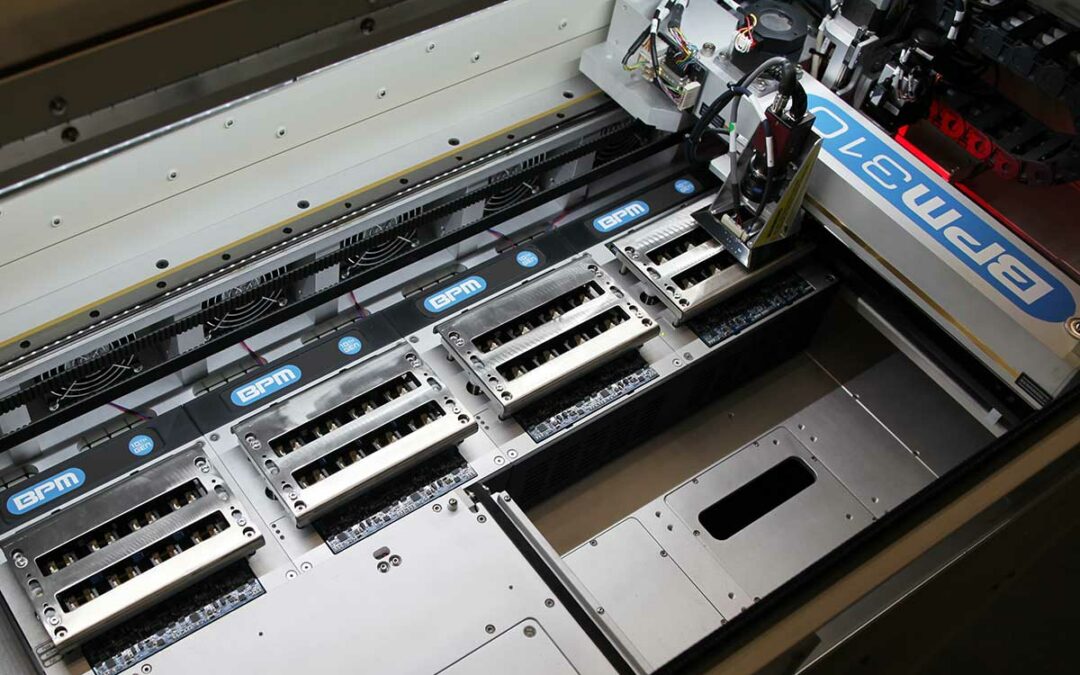
In the grand finale of our series examining offline in-socket programming, we delve into its profound impact on maximizing assembly line uptime, enhancing inventory management, reducing cost per device, and offering higher first-pass yield. Offline programming has the potential to avert issues that could halt the assembly line, prevent faulty devices from reaching assembly, and reduce rework, thereby ensuring continuous operation and efficient inventory management.
 Maximizing Assembly Line Uptime
Offline programming separates the programming process from the assembly line, ensuring that any issues arising during programming don’t impact the assembly line directly. By preventing faulty devices from reaching the assembly process and reducing rework due to programming errors, offline programming allows the assembly line to run more smoothly. This separation enables the assembly line to continue operations even if programming needs to pause, buffering against fluctuations in demand and maximizing productivity.
Efficient Inventory Management
Offline programming allows common “blank chips” to be purchased in bulk and programmed in just-in-time to meet production requirements. If a buffer is desired, devices can be produced in advance and stored; and if necessary, to be reprogrammed for code changes. This ensures a steady supply of programmed devices, smoothing production flows, and reducing the amount of work-in-progress inventory. By guaranteeing each chip is correctly programmed before it enters assembly, offline programming also mitigates the risk of having to scrap or rework finished goods.
Reducing Cost Per Device
The cost per device, a key metric in the programming and manufacturing industries, evaluates the efficiency and cost-effectiveness of programming methods. Offline programming often allows for higher throughput, better equipment utilization, energy efficiency, minimized downtime, and reduced dependency on skilled labor, all contributing to a potentially lower cost per device.
Superior First-Pass Yield

High-quality signals, Examples: Free-Running Clock (200MHz)
Programming in-socket on a dedicated system using clean waveforms leads to very high first-pass yields, reducing scrap and lowering cost per device. Bad devices can be identified upstream and returned to component suppliers for replacement or credit.
A Contract Manufacturer programming microcontrollers for an automotive client can benefit from offline programming. Preprogramming and storing chips enable them to maintain assembly line uptime, manage inventory efficiently, and buffer against sudden demand surges. The parallel programming feature also allows them to reduce the cost per device by programming multiples of the same devices concurrently.
The superior first-pass yield of offline programming can be crucial for an OEM manufacturing advanced drones. These drones use sophisticated chips that need to function perfectly. By programming in-socket on a dedicated system, they ensure very high first-pass yields, reducing the chance of scrapped units and lowering the overall cost per device.
In conclusion, this six-part series has comprehensively explored the multifaceted benefits of in-socket programming. From superior quality assurance, flexibility, and ease of troubleshooting to notable efficiency gains, exceptional versatility, and impacts on assembly line uptime and inventory management, offline programming offers significant advantages. These benefits, along with the potential for reduced costs and improved first-pass yield, make offline in-socket programming a powerful tool for electronics manufacturing.
Read Part I | Read Part II | Read Part III | Read Part IV | Read Part V

by Scott Bronstad | Jun 12, 2023 | Case Study, Technology
In an era where online connectivity is increasingly becoming a staple in our day-to-day life, the concept of offline programming, specifically offline in-socket programming, can seem somewhat unconventional. However, this proven process holds significant potential to revolutionize industries, bringing numerous advantages that outshine other programming methods. This six-part article series will delve deep into the benefits of offline programming, unearthing how it paves the way for superior quality, unbridled flexibility, simplified troubleshooting, heightened efficiency, remarkable versatility, and maximal assembly line uptime.
In this comprehensive exploration, we will unfold each benefit in dedicated articles, highlighting real-world examples, dissecting relevant principles, and presenting practical insights for implementation. Regardless of whether you’re a seasoned professional seeking fresh insights or a beginner intrigued by the prospect of offline in-socket programming, this series is designed to illuminate this technique’s transformative potential. Join us as we journey through the fascinating landscape of offline programming, uncovering how this innovative approach can unlock unprecedented operational advantages in a myriad of industries.
Part 1 – Elevating Quality: How Offline Programming Mitigates Cost and Ensures Authenticity
In the world of electronic assembly, quality control is a paramount concern. Offline programming offers a revolutionary approach to guarantee the highest standard of quality, promising impeccable individual programming and verification of each chip. This sophisticated technology enables thorough validation and factory device ID checking, effectively verifying the device’s authenticity. The quality assurance this technique offers doesn’t merely serve as a reassuring stamp of approval. It’s a proactive method that not only ensures each chip’s correct functionality prior to installation but also significantly minimizes the Cost of Poor Quality (COPQ). The ripple effect of this high-quality assurance can be felt in various domains, and here is the tale it weaves:
Rework
Consider a scenario where a chip, already nestled in its place on the board, shows signs of malfunction. The consequential rework process is akin to delicate surgery. It necessitates the careful extraction and reprogramming of the chip, followed by its reinstallation. Each of these steps incurs cost, demands time, and requires the expertise of skilled technicians. Moreover, this surgical process brings with it the risk of unintentional damage to adjacent components.
In some unfortunate circumstances, the balance of cost and feasibility may tilt unfavorably, rendering rework unviable. This necessitates a hard choice – consigning the entire board to the scrap pile. Such a decision carries with it the weight of substantial material and labor costs and the regret of wasting perfectly good components sharing the same board.
The narrative deepens as we recognize the potential cascading effect of these challenges. Delays in production birthed by rework and scrap can ripple outwards, leading to missed delivery deadlines, potential financial penalties, and a blow to customer trust.
The final act in this cautionary tale involves poor quality programming rearing its head as product failures in the field. Such incidents can trigger a chain of undesirable outcomes: costly product returns, warranty claims, and perhaps most damagingly, a tarnished company reputation.
In weaving together these scenarios, it’s clear how offline in-socket programming’s quality assurance can dramatically curb the Cost of Poor Quality (COPQ). While there’s a modest rise in upfront costs due to enhanced testing and validation, the long-term fiscal savings, achieved by curtailing rework, scrap, delays, and warranty claims, are significant. In essence, device programming isn’t merely a process; it’s a forward-thinking strategy for superior quality control and cost-effective production.
 Consider an Original Equipment Manufacturer (OEM) for smartphones. They need to ensure the microcontrollers embedded in their devices are programmed correctly to function optimally. By utilizing offline in-socket programming, they are able to test and verify the programming of each microcontroller before it is assembled into a smartphone, thereby reducing the risk of faulty devices and enhancing overall product quality.
As we’ve seen, offline programming’s quality assurance plays a pivotal role in cost minimization and maintaining product authenticity. Yet, this is just one facet of its potential. The next installment in our series will delve into another compelling advantage of offline programming – its inherent flexibility.
In our upcoming discussion, we will explore how this technique accommodates an array of chips and applications, readily adapts to changes, and how it empowers organizations to swiftly respond to evolving market needs. So, stay tuned for Part 2 as we dissect the flexibility of offline in-socket programming and its implications for modern electronic assembly.
Read Part II | Programming and Vertical Manufacturing | BPM API Delivers Quality and Traceability
by Scott Bronstad | Oct 1, 2008 | Flash, Technology, White Papers
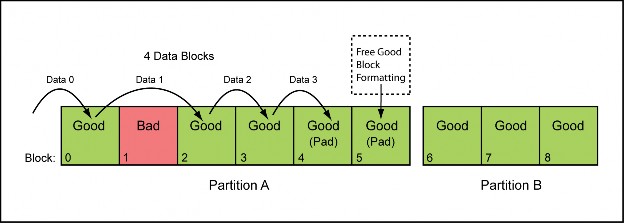
Overview During the manufacturing of electronic systems, blank non-volatile devices must often be programmed with initial data content. This allows the target system to get up and running, and is referred to as “factory programming,” “factory pre-programming,” or...
by Scott Bronstad | Feb 27, 2019 | Case Study, How To, Technology
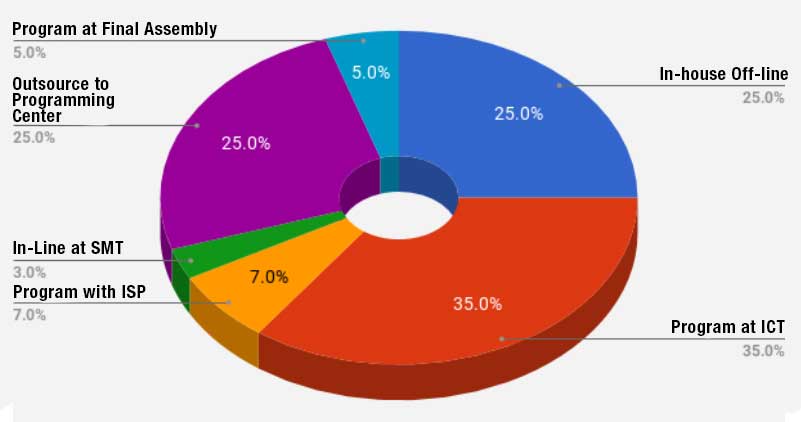
What is the Best Way to Get Devices Programmed? There are lots of ways to get your data on devices, and there’s no one “Best” programming that is always better than another. Options that are available today: In-House Off-Line Programming Program at ICT...