
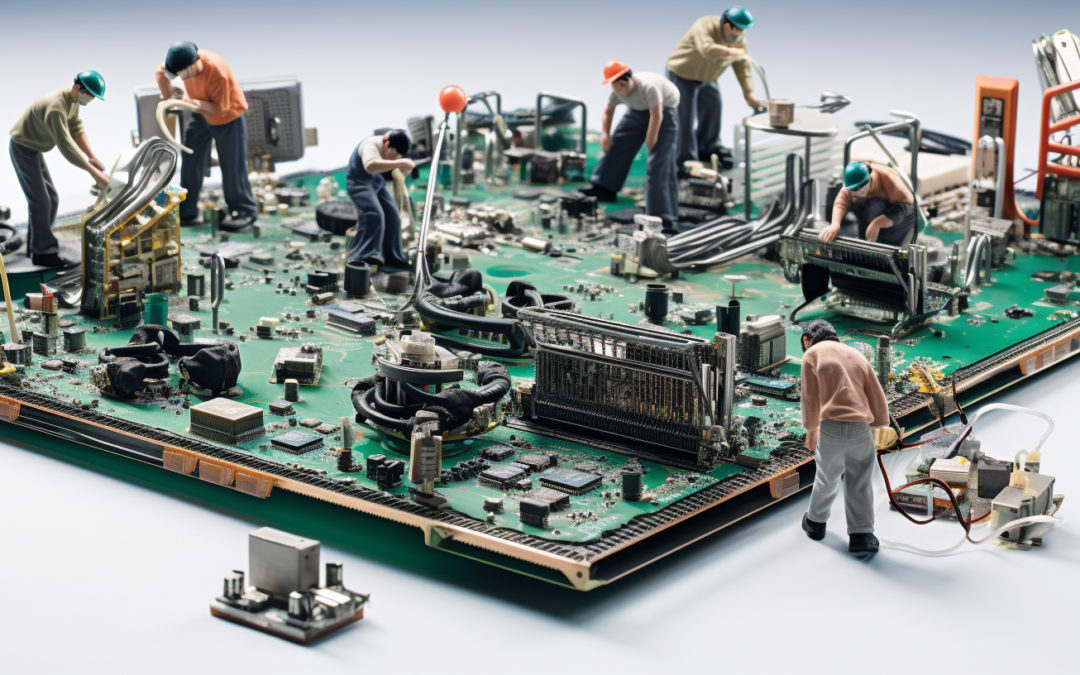
White Paper: Solving ICT Bottlenecks Through Offline Device Programming
Abstract
As the manufacturing sector transitions to more complex electronic components, the efficiency and cost-effectiveness of programming semiconductor devices are of paramount importance. While In-Circuit Test (ICT) programming has been the traditional approach, its inherent limitations often create bottlenecks that can critically impact production lines. This paper offers an in-depth analysis of these challenges and positions offline in-socket semiconductor device programming as a superior alternative, both in terms of operational efficiency and cost savings.
Table of Contents
- Introduction
- Limitations of ICT Programming
- Advantages of Offline In-Socket Programming
- Conclusion
- Recommendations
1. Introduction
1.1 Background
In the realm of electronic manufacturing services, the programming of semiconductor devices is an inescapable necessity. The complexity and miniaturization of modern electronic components, combined with the insatiable demand for quicker, more efficient production lines, have placed a spotlight on the techniques employed for device programming. In-Circuit Test (ICT) programming has long been the standard approach due to its ability to combine the testing and programming phases. By integrating these two processes, ICT ostensibly offers an efficient solution to streamline the manufacturing process.
1.2 Scope and Objective
However, as with any technology, ICT programming is not without its drawbacks. High capital costs, slower production throughput, and substantial resource allocation for rework are among the significant concerns. These factors often combine to form bottlenecks that slow down the entire production pipeline. The objective of this paper is to critically evaluate these limitations and present an alternative approach—offline in-socket semiconductor device programming. This method promises not only to alleviate the existing bottlenecks but also offers avenues for significant operational efficiency and cost-effectiveness.
1.3 Methodology
To construct a compelling case for offline in-socket programming, this paper will utilize a multi-faceted methodology. It will dissect the inherent challenges of ICT programming, explaining both the technical and financial implications. Subsequently, it will delve into the specific advantages of offline in-socket programming, supporting these points with empirical data, case studies, and technical analyses. Finally, it will offer concrete recommendations for manufacturers looking to optimize their programming methods.
1.4 Importance
Understanding the bottlenecks in ICT programming is vital for any stakeholder in the electronic manufacturing sector. From Original Equipment Manufacturers (OEMs) to contract manufacturers and programming centers, these limitations can be the differentiating factor in a hyper-competitive market. By scrutinizing these challenges and offering a tangible, practical solution, this paper aims to contribute to the broader dialogue surrounding efficient manufacturing processes.
2. Limitations of ICT Programming
2.1 High Initial Setup Costs
2.1.1 Capital Expenditure on Equipment
ICT programming demands an extensive capital investment in specialized, purpose-built equipment such as bed-of-nails fixtures and Automated Test Equipment (ATE). While a bed-of-nails fixture costs can range from $10,000 to $50,000, a full-scale ATE system’s price can skyrocket to hundreds of thousands of dollars1. These figures don’t even account for the additional costs related to installation, calibration, and the potential infrastructure modifications required for housing such equipment.
2.1.2 Obsolescence and Upgrades
Technology evolves at a rapid pace, contributing to the accelerated obsolescence of the existing equipment. The denser layouts and smaller geometries of modern semiconductor devices often make the existing testing setups incompatible. This technological evolution necessitates either the expensive retrofitting of existing systems or complete replacements. Therefore, companies must factor in a continuous capital expenditure cycle for their ICT setups, making it a recurring financial burden.
2.1.3 Expertise and Third-Party Support
The complexity of ICT equipment implies that a high level of expertise is needed for both operation and maintenance. Manufacturers often have to resort to employing specialized in-house engineers or third-party consultancies for the same. This situation further adds to the overall cost structure, as these services do not come cheap.
2.2 Slower Throughput
2.2.1 Sequential Programming
The sequential nature of ICT is its most glaring limitation when it comes to production throughput. While the simultaneous testing and programming of devices may seem efficient on paper, the practical application tells a different story. Usually, each semiconductor device on the printed circuit board (PCB) must be programmed and tested individually, leading to possible delays as the number of devices on the board increases. It would behoove you to ask your ICT provider if they offer parallel programming (some now do).
2.2.2 Resource Utilization
If the ICT provider does not offer programming in parallel, and instead is limited to the sequential process, the production line remains halted or slowed down while waiting for the ICT process to complete. This stalling can result in inefficient utilization of resources such as manpower and machinery, leading to increased operational costs.
2.2.3 Queue Management
As the ICT process is slower, it can create backlogs in the production queue. Effective management of these queues demands additional overheads in the form of dedicated staff or sophisticated scheduling algorithms, both of which have their costs and complexities.
2.3 Cost of Rework
2.3.1 Rework Procedures
Should a device fail the programming stage during ICT, the subsequent rework process is not only time-consuming but also costly. A typical rework process involves desoldering the faulty device, removing it from the PCB, replacing it with a new device, resoldering, and then re-running the entire programming and testing procedure.
2.3.2 Material Wastage
The rework process incurs wastage of materials, including the solder and the faulty semiconductor devices themselves. While the devices might be cheaper components in the broader scheme, these costs can quickly accumulate over high production volumes.
2.3.3 Labor Costs
The labor-intensive nature of the rework process means that skilled technicians must be involved, adding another layer to the already high costs associated with ICT programming. Given the complexity and risk associated with desoldering and resoldering, there is very little margin for error, requiring highly skilled labor.
3. Advantages of Offline In-Socket Programming
3.1 Scalability and Flexibility
3.1.1 Modular Design
Offline in-socket programmers typically embrace a modular design, which allows manufacturers to easily scale their operations in line with demand. Unlike ICT setups, which often necessitate complete overhauls to accommodate changes, modular in-socket systems enable the addition or subtraction of modules to meet new requirements.
3.1.2 Adaptability to New Technologies
Offline in-socket programming systems are inherently more adaptable to new semiconductor technologies, thanks to their focus on software-driven solutions. Updating to a new programming algorithm is often as simple as a software upgrade, obviating the need for expensive hardware modifications.
3.2 Efficiency and Throughput
3.2.1 Parallel Programming
One of the most significant advantages of offline in-socket programming is the ability to program multiple devices simultaneously. This parallelism dramatically reduces the time required for the programming stage, leading to faster production cycles and greater throughput.
3.2.2 Resource Optimization
With offline in-socket programming, production lines can operate more continuously. Devices are programmed offline without halting or slowing down the other manufacturing steps, allowing for optimal utilization of both manpower and machinery.
3.2.3 Reduced Queue Times
The efficiency gains in programming often translate to reduced queue times in the production pipeline. This efficiency removes the need for complex queue management systems or additional staffing to manage backlogs, thereby reducing operational overheads.
3.3 Cost-Effectiveness
3.3.1 Lower Capital Costs
The upfront investment for offline in-socket programming is generally lower than that of traditional ICT setups. The absence of expensive fixtures and ATE systems substantially reduces initial setup costs.
3.3.2 Reduced Maintenance and Upgrade Costs
Given their software-centric design, offline in-socket programming systems usually incur lower maintenance costs. Software updates to accommodate new device types or fix bugs are far more economical than hardware upgrades in ICT systems.
3.3.3 Minimized Rework Costs
With the offline approach, devices that fail the programming process can be replaced before they are soldered onto the PCB. This proactive fault detection eliminates the need for costly and time-consuming rework procedures, resulting in both material and labor savings.
5. Conclusion and Future Outlook
5.1 Summary of Findings
This white paper has systematically outlined the limitations and challenges presented by ICT programming, particularly its high initial setup costs, its typically sequential nature, and the complexity involved in updating and maintaining the system. In contrast, offline in-socket programming emerges as a technically superior and financially viable alternative.
Case studies from diverse sectors, namely automotive, aerospace, and medical devices, have concretely illustrated the advantages of offline in-socket programming. These include significantly enhanced throughput, substantial cost savings, quicker time-to-market, and greater flexibility in accommodating technological advancements.
5.2 Future Outlook
The benefits of offline in-socket programming are not limited to the industries discussed. As IoT devices proliferate and more industries become reliant on programmable semiconductor components, the need for efficient, flexible, and scalable programming solutions will only grow.
The future of device programming is evidently leaning towards more modular and adaptable systems. Emerging technologies, such as Machine Learning and Artificial Intelligence, are poised to make these systems even more efficient, capable of predictive maintenance and self-optimization.
5.3 Recommendations
For organizations considering a switch from ICT to offline in-socket programming, the transition process should involve:
- Preliminary Analysis: A thorough cost-benefit analysis to ascertain the financial and technical gains.
- Vendor Selection: Opting for a vendor with a track record of reliability, strong after-sales support, and the ability to meet industry-specific needs.
- Pilot Testing: Before full-scale implementation, a pilot phase should be conducted to fine-tune the setup and resolve any potential issues.
- Employee Training: Investing in comprehensive training for staff to manage the new system effectively.
- Review Mechanism: Regular performance reviews to ensure the system continues to meet operational requirements and remains scalable with future technological advancements.
Glossary
Automated Test Equipment (ATE)
Definition: A system that performs tests on a device, using automation to quickly perform measurements and evaluate the test results. An ATE can be a standalone system or may integrate with other testing apparatus like bed-of-nails fixtures for more comprehensive testing scenarios.
Bed-of-Nails Fixture
Definition: A testing apparatus used in the ICT environment where numerous small pins make contact with various test points on a PCB. The setup allows for simultaneous testing and programming of assembled devices.
Electronic Control Unit (ECU)
Definition: A type of embedded system in automotive electronics that controls one or more of the electrical subsystems in a vehicle.
In-Circuit Test (ICT)
Definition: A form of white-box testing where an electrical probe tests a populated PCB, checking for shorts, opens, resistance, capacitance, and other basic quantities to determine if the assembly was correctly fabricated.
Infusion Pump
Definition: A medical device that delivers fluids, such as nutrients and medications, into a patient’s body in controlled amounts.
Internet of Things (IoT)
Definition: The network of physical objects—devices, vehicles, buildings, and other items—embedded with electronics, software, sensors, and network connectivity that enables these objects to collect and exchange data.
Microcontroller
Definition: A compact integrated circuit designed to govern a specific operation in an embedded system.
Printed Circuit Board (PCB)
Definition: A board made from a non-conductive material with conductive lines printed or etched. Electronic components are mounted on the board and the traces connect the components together, forming a circuit.
Return on Investment (ROI)
Definition: A financial metric used to measure the probability of gaining a return from an investment. It is a ratio that compares the gain or loss from an investment relative to its cost.
Throughput
Definition: The number of units of a product that can be manufactured in a given period of time.

 Maximizing Assembly Line Uptime

 Concurrent Programming
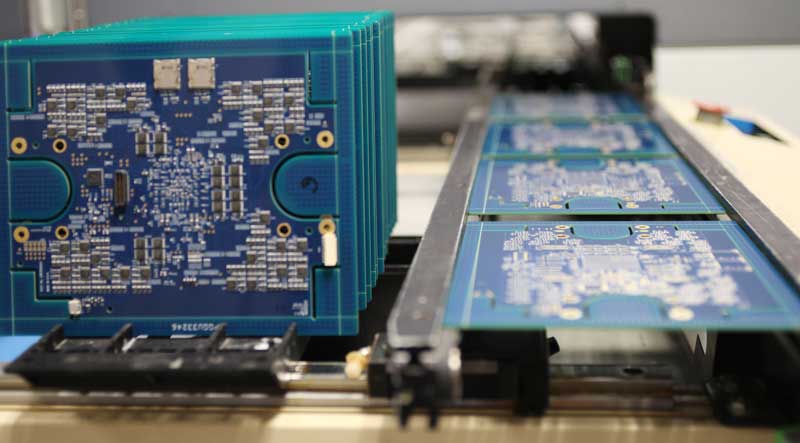
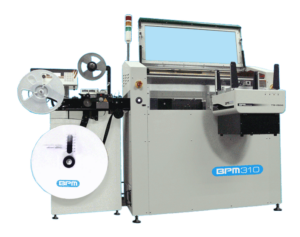 To overcome the limitations of manual device programming, automated device programming systems can be used for high-volume production. These systems typically include multiple device programmers that are integrated into a single robotic platform, which can be controlled by a computer and a central controller. Automated device programming systems can significantly increase the efficiency and speed of programming semiconductor devices. They can also improve the accuracy and consistency of the programming process by automating repetitive tasks. Additionally, automated systems can be equipped with advanced features such as data logging, monitoring, and testing to ensure the quality of the programming process. Marking and media transfer are also possible.